Digital Imaging Camera/SDK
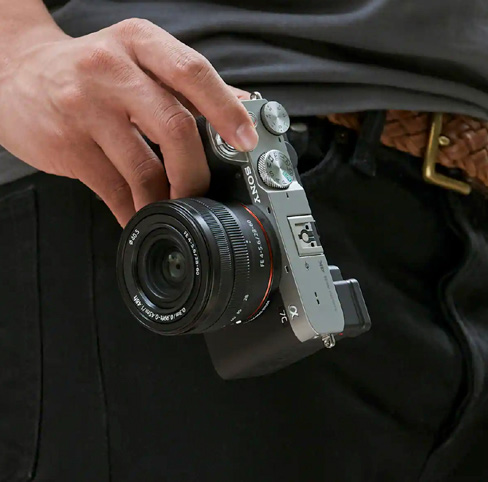
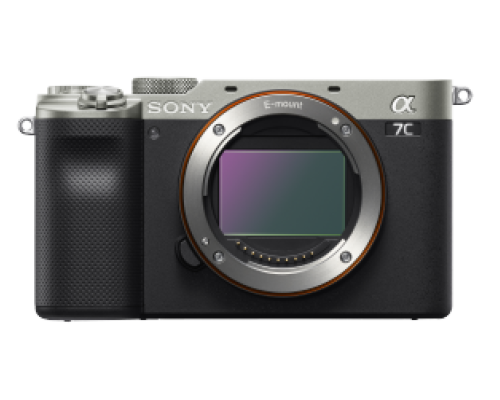
Sony Alpha camera supported by Sony SDK (Software Development Kit)

Sony Alpha camera supported by Sony SDK (Software Development Kit)
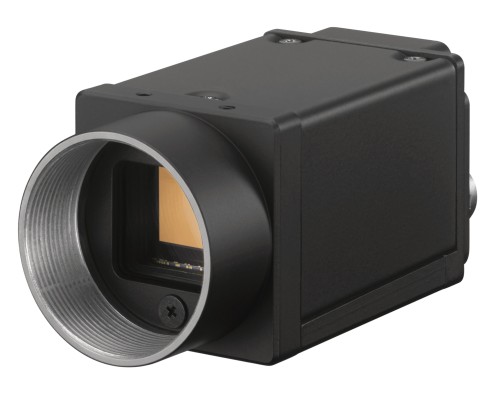
Digital Video Camera using various interfaces (USB, Gigabit Ethernet, Camera link)
While generative AI might have grabbed most of the headlines over the past couple of years, another equally transformative technology is also starting to receive a lot of attention – physical AI, which enables autonomous systems to perceive, understand, reason, and perform complex actions in the real (physical) world.
Based on the seamless integration of cameras, sensors, actuators, and other control elements, physical AI combines advanced AI models with real-time environmental awareness, enabling machines such as driverless cars and mobile robots to navigate and interact with the world around them.
Put simply, physical AI brings AI into real-world systems, and that holds the potential to reshape key industries such as production, manufacturing and logistics.
Helping machines perceive and act
At the centre of many physical AI systems sits a critical component: sensing. Before an autonomous machine can reason or act, it must first capture and interpret the data that surrounds it, whether that’s visual images, depth or motion. This requirement makes advanced image sensing technologies fundamental to the development of physical AI.
That’s where Sony’s image sensing solutions come in. From CMOS image sensors and machine vision cameras to advanced depth sensing and LiDAR technologies, Sony ISS’ sensing portfolio gives machines the spatial awareness required for next-generation physical AI-based autonomous systems, helping them perceive and act.
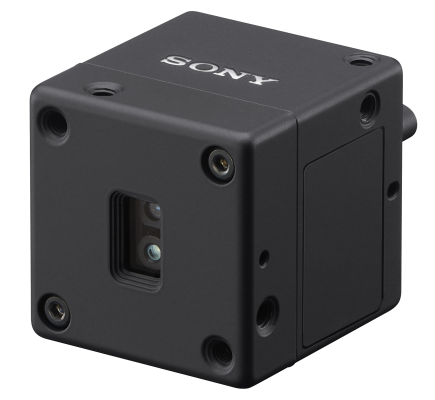
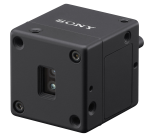
One of the latest examples of these enabling technologies is Sony’s AS-DT1, a high-precision, miniature LiDAR Depth Sensor. AS-DT1 is ideally suited for applications such as drones, robotics and autonomous systems, making a difference for physical AI implementations in five key ways.
1. Miniaturisation makes physical AI deployable in real-world autonomous systems
The AS-DT1 leverages miniaturisation and optical lens technologies from Sony ISS’ machine vision industrial cameras, and the solid-state design eliminates the need for many moving parts. These factors mean the AS-DT1 measures just 29mm x 29mm x 31mm – making it roughly the size of a human thumb – while weighing only 50g. The size, weight, and robustness characteristics make the AS-DT1 suitable for applications such as autonomous mobile robots, where there is limited space for depth sensors, and drones, where payload weight affects the flight distance.
2. dToF and SPAD technology deliver the precision required for physical AI
The AS-DT1 deploys the latest Direct Time-of-Flight (dToF) technology, which precisely measures the time it takes for a pulse to travel to an object and back. This approach delivers high accuracy and long-range performance, but it requires sophisticated electronics to perform its task.
A significant advancement in dTOF technology is the integration of a Single-Photon Avalanche Diode (SPAD) sensor. Measurement over long distances and with high accuracy is made possible by using this structure as the light-receiving element in the SPAD depth sensor. Sony’s proprietary dToF ranging module, equipped with a SPAD sensor, can measure distances at various ranges, for example, up to 10 meters with a margin of ±5 cm, both indoors and outdoors, while distance resolution is 0.25mm.
3. Long-range sensing expands physical AI use cases
The AS-DT1 is highly accurate, even at distances of 40 meters indoors and 20 meters outdoors, under bright summer conditions, which can be challenging when used in applications such as inspecting infrastructure, including bridges, highways, and dams. The horizontal field of view is 30° or more, while the maximum measurement range @15 fps, 50% reflectivity, centre, is listed as indoor: 40 meters and outdoor 20 meters.
4. Physical AI systems need reliable sensing in difficult environments
Additionally, it can accurately measure distances to objects that are difficult to detect with other ranging methods. This includes low-contrast subjects, low-reflectivity objects, and floating objects. It also contributes to improved reliability for challenging harsh applications, such as those operating across various temperature environments and weather conditions. The technology excels in conditions that other sensors find challenging, such as adverse weather or thick vegetation, and can accurately measure large terrains.
5. Ease of integration accelerates autonomous system development
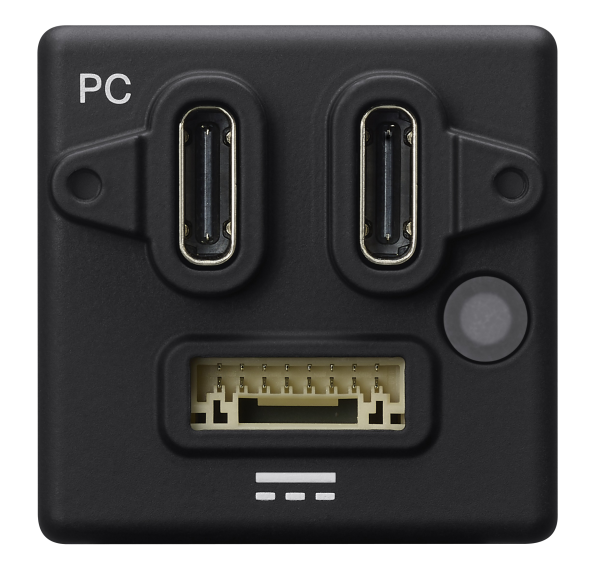
The AS-DT1 is packaged in a compact housing, making it easy to integrate into various devices. It offers internal processing and outputting point cloud, histogram, and intensity data, and features USB-C IN/OUT with Power over USB functionality. The module can also support daisy-chain connections of up to four modules to expand the field of view. Finally, to streamline development, the AS-DT1 includes an SDK and source code compatible with Linux ARM32, Linux ARM64, Linux x64, Windows 11, OpenCV, and ROS2, making it adaptable to a wide range of platforms.
These high-performance capabilities position the AS-DT1, alongside Sony ISS’ wider sensing portfolio, as a foundational technology for the next generation of physical AI. As autonomous systems become more intelligent, mobile, and embedded in the real world, the ability to sense surroundings with speed, accuracy, and reliability will become a defining factor in their success.
As physical AI continues to evolve towards large-scale deployment, next-generation sensing technologies will play a central role in turning that potential into reality.
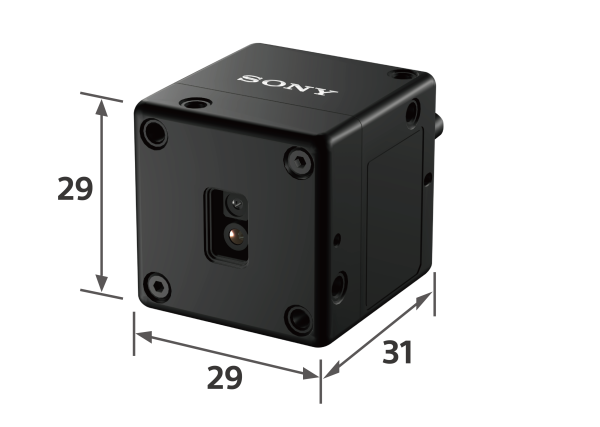
AS-DT1 ‘Direct Time of Flight’ LiDAR Depth Sensor Provides Precision Measurement Accuracy, Distance Resolution and Measuring Range