Digital Imaging Camera/SDK
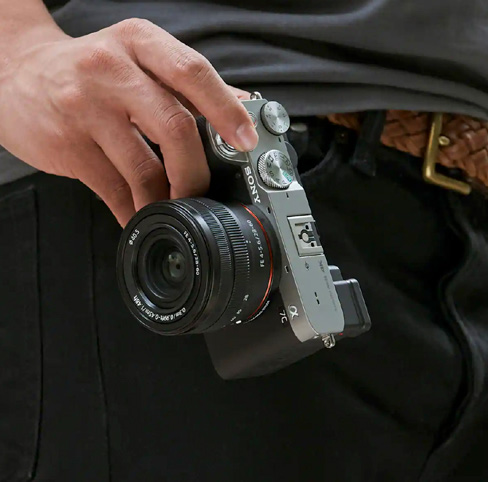
Sony Alpha camera supported by Sony SDK (Software Development Kit)

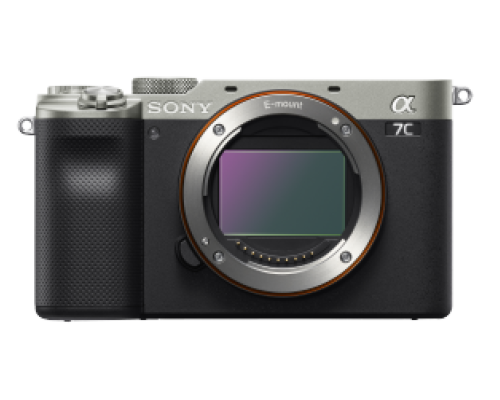
Sony Alpha camera supported by Sony SDK (Software Development Kit)
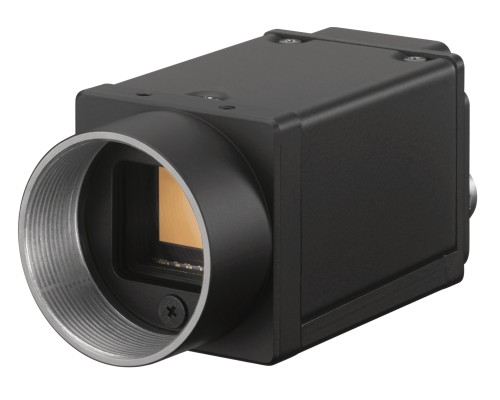
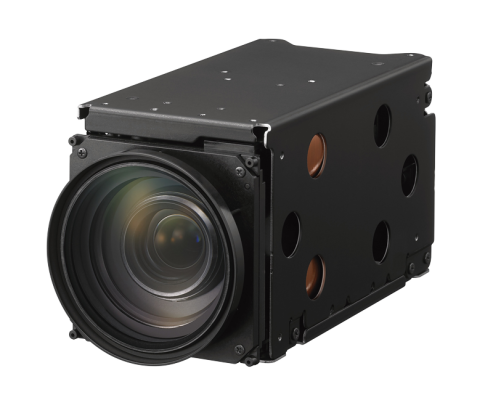
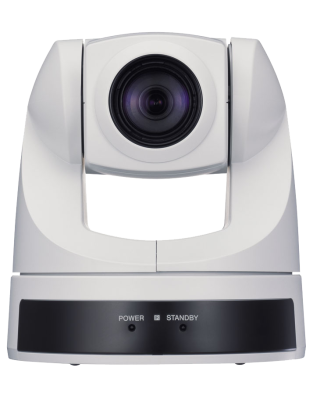
Digital Video Camera using various interfaces (USB, Gigabit Ethernet, Camera link)
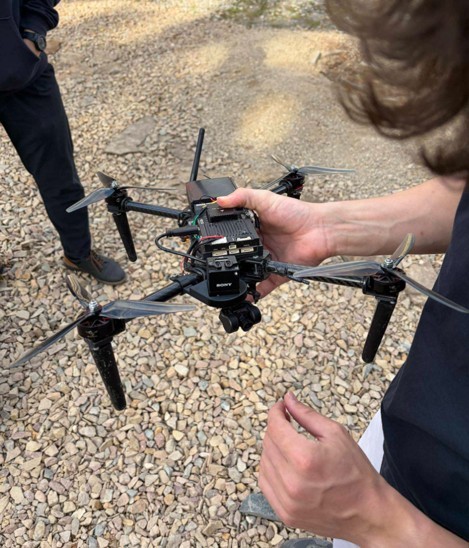
There are some incredible drone projects taking place within academia across Europe – and Sony Image Sensing Solutions is at the heart of these endeavours, supplying state-of-the-art sensors that enable advanced navigation and control.
These activities are exemplified by EPFL Xplore, a student-led association involving young engineers from mechanics, electronics, software and space sciences backgrounds. Based in Lausanne, Switzerland, EPFL Xplore has emerged as a leading force in designing and building autonomous systems such as rovers and drones, and a proving ground for the next generation of space engineers.
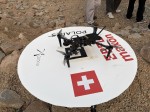
In May 2026, EPFL Xplore competed at the FHNW Rover Träff at the University of Applied Sciences and Arts Northwestern Switzerland. Although primarily a planetary rover competition, the event also included an autonomous drone navigation task, in which EPFL Xplore's drone achieved full points.
In May 2026, EPFL Xplore competed at the FHNW Rover Träff at the University of Applied Sciences and Arts Northwestern Switzerland. Although primarily a planetary rover competition, the event also included an autonomous drone navigation task, in which EPFL Xplore's drone achieved full points.
The team followed that success by taking first place overall at the 2026 European Rover Challenge, where its drone also achieved a perfect 300/300 in the dedicated drone mission and secured the Drone Excellence Award.
“The drone is a fully custom system, designed, built and machined entirely by our in-house team,” says Nader Rizk, Drone Team Leader at EPFL Xplore. “We assembled it for the first time at the beginning of the year, and the first flights followed soon afterwards. Those early flights can be quite scary because you don’t know if the drone is going to crash, but we gradually got it flying in a very stable way and developed it into a really reliable system.”
As the project progressed, the team expanded to bring together mechanical engineering with software and coding expertise. “It was an intense development period, with a lot of sacrifices alongside our studies and more than a few all-nighters. But ultimately we were able to build a platform capable of performing multiple autonomous missions,” he adds.
Sensing the world in 3D
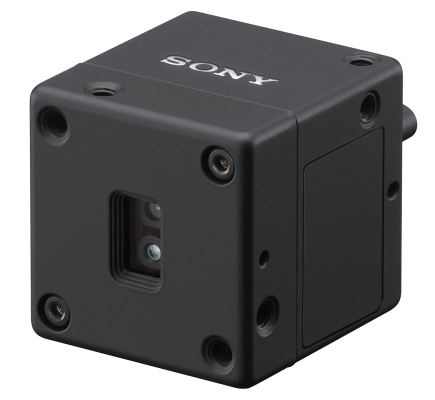
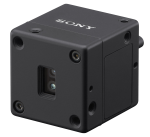
Achieving that level of autonomy required the drone to build an accurate picture of the environment around it. Central to this capability was Sony’s AS-DT1 compact LiDAR depth sensor. The team used data from the AS-DT1 to generate a live 3D point cloud of its surroundings for mapping, alongside camera, IMU and optical-flow data for visual-inertial odometry. Together, these technologies enabled the drone to navigate autonomously while mapping its environment, detecting and avoiding obstacles, and locating objects with high precision.
The AS-DT1’s suitability for drone applications comes down to several factors. It combines high-precision, long-range 3D sensing with an exceptionally small, lightweight design — just 29 × 29 × 31 mm and less than 50 g — minimising payload impact and improving flight endurance.
Its solid-state dToF technology provides accurate depth data at up to 40 m indoors and 20 m outdoors in bright conditions, supporting applications such as 3D mapping, autonomous navigation, collision avoidance and precision landing.
These technical performance characteristics made it ideal for integration onto EPFL Xplore’s autonomous platform. “It’s a very cool piece of equipment,” says Nader Rizk. “What struck me first was the size: it was extremely compact, and it weighed so little, which is a fantastic attribute for drone use. The build quality was excellent too, with rugged aluminium case construction.”
The sensor was mounted on the top of the drone for effective data acquisition. “Performance exceeded our expectations, with the sensor producing very consistent 3d point-cloud data, making it highly reliable in operation under various conditions,” he adds.
Towards the next generation of autonomy
Looking forward, EPFL Xplore expects to continue developing the drone and enter it into further competitions next year.
“These events are fantastic for collaboration and learning,” says Nader Rizk. “We were up against many other teams from some of the best universities in Europe, and by talking to them, it was a great opportunity to see what they had built and how they approached the challenges.”
From a personal perspective, Nader Rizk also plans to expand his autonomous systems research into the rapidly emerging field of humanoid robotics. Here, technologies such as the AS-DT1 could be combined with cameras and other sensors to give autonomous systems an increasingly detailed understanding of their surroundings.
“I have always had a really positive experience working with Sony, and hopefully that relationship will continue,” he concludes. “It’s becoming obvious that the future of autonomous systems will increasingly depend on the fusion of vision and point-cloud data, and consequently sensors such as LiDAR will be at the heart of that.”