Digital Imaging Camera/SDK
Sony Alpha camera supported by Sony SDK (Software Development Kit)

Sony Alpha camera supported by Sony SDK (Software Development Kit)
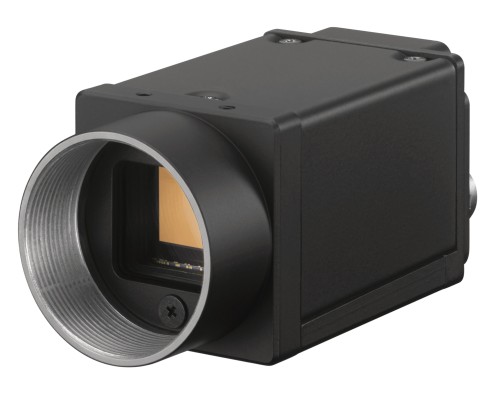
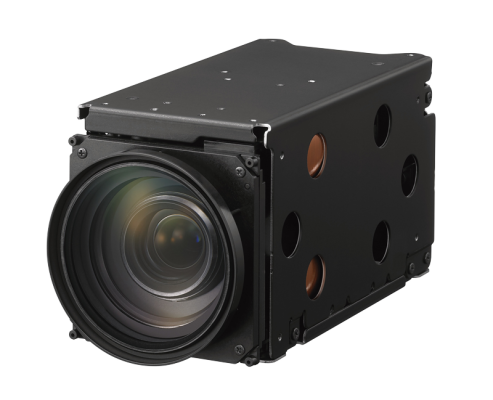
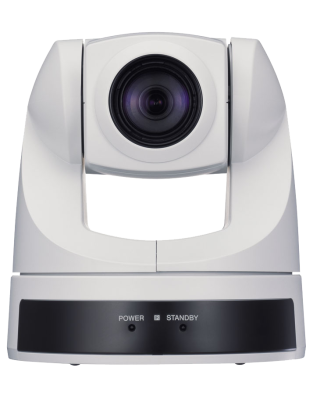
Digital Video Camera using various interfaces (USB, Gigabit Ethernet, Camera link)
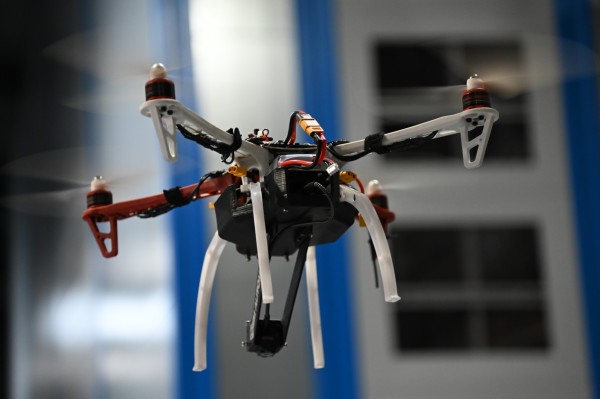
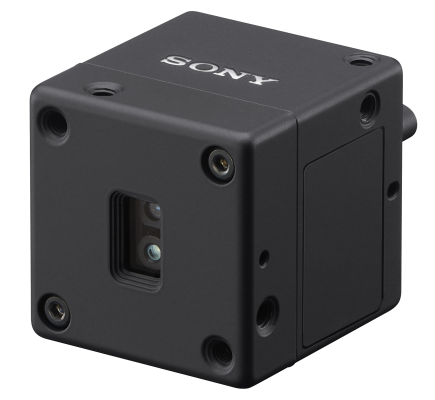
Sony’s AS-DT1 LiDAR depth sensor has been put through its paces in an innovative drone project focused on collision avoidance and landing.
Autonomous drone navigation in industrial environments presents a significant challenge. Facilities such as warehouses, factories and logistics hubs are often dense, fast-moving and GPS-denied, requiring systems that can interpret their surroundings instantly and reliably. Traditional single-point laser sensors offer limited spatial awareness, making precise positioning, collision avoidance and safe landing difficult. As a result, there is a growing need for more advanced sensing technologies capable of delivering detailed, real-time 3D environmental data.
To address this, UK-based industrial automation specialist OEM Automatic explored the potential of integrating Sony ISS’s AS-DT1 LiDAR depth sensor in a pilot drone project designed to test real-time 3D sensing and in-flight data streaming.
The project - the brainchild of Ibrahim Ahmethan, a Computer Vision Application Engineer at OEM Automatic - aimed not only to validate the sensor’s technical capabilities, but also to better understand how it could be integrated into autonomous platforms operating in industrial settings. By combining in-house hardware and software development, the team set out to build a fully functional proof-of-concept drone capable of capturing and processing depth data during flight.
Overcoming integration challenges
OEM Automatic had identified the potential for drone use in industrial facilities, but recognised that current single-point laser-based sensors had limited positioning capabilities. Sony ISS’ AS-DT1’s proprietary direct Time of Flight (dToF) ranging module is equipped with a Single Photon Avalanche Diode sensor, which utilises multiple ranging points for distance measurement. This means it can accurately measure distances in three dimensions: length, width, and depth. Furthermore, it can measure distances to low-contrast or low-reflectivity objects, which are more difficult to detect with other ranging methods.
OEM Automatic received an early release of the AS-DT1 and decided to explore real-world use cases. This included the development of custom software to interface with the AS-DT1 and process real-time depth data, as well as the assembly of the drone platform by 3D-printing key structural components to optimise weight and balance.
“We began by exploring the software development kit (SDK) in Python to understand how the sensor worked and to extract the 3D point cloud data,” says Ibrahim Ahmethan. “Once we had that, we built a ROS2 driver to stream the data and ran it on a Raspberry Pi. In parallel, we physically built the drone in-house using techniques such as soldering electronics and 3D printing custom parts, before bringing the hardware and software together into a fully working system.”
A key milestone came when the team successfully streamed 3D point cloud data into the ROS2 environment, marking the first step in bringing real-time spatial awareness to the system.
Building the proof-of-concept drone
With hardware and software integration efforts progressing well, the next stage was to create a fully functional proof-of-concept, with a flight-ready drone fitted with the AS-DT1 for real-time 3D data. The first flight took place inside OEM Automatic’s warehouse in Leicester, UK, and the drone was able to navigate aisles and structures while capturing stable, high-precision depth information. While full obstacle avoidance is still under development, the project successfully established real-time 3D data streaming as a foundation for future autonomous capabilities.
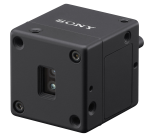
OEM Automatic says that it found the hardware and software integration relatively straightforward, with the SDK and supporting documentation providing engineers with detailed insight into coding. The engineers were also impressed with the quality and robustness of the AS-DT1, with the aluminium alloy housing achieving both lightness and robustness. The small form factor was also critical for the drone application, with the AS-DT1 measuring 29 mm wide x 29 mm high x 31 mm deep and weighing just 50g.
“Sony ISS always stands out in terms of the finest engineering for every detail,” continues Ibrahim. “From the moment we took the sensor out of its box, you could feel the quality and robustness of construction. The form factor is a critical consideration for drone applications, as its small size enables greater flexibility in onboard integration. Each gram of weight significantly affects flight duration, so the low weight of the AS-DT1 is a major advantage in supporting longer flights.”
Imagining other autonomous applications
OEM Automatic plans additional drone flights for extended imaging sessions to support enhanced collision avoidance and landing. The company’s engineers believe the AS-DT1 could also be applied to applications such as robotics, mapping, GPS-denied navigation, automotive/in-cabin sensing and security and privacy-sensitive environments such as healthcare.
“The AS-DT1 is an incredibly flexible and scalable solution,” adds Ibrahim. “For example, it can be daisy-chained with multiple devices, giving 360 degrees of view. That sort of capability will open it up for deployment in many different types of autonomous systems across industries.”
Ultimately, OEM Automatic says the drone project provided a lot of excellent insight into operating the AS-DT1 in the real world. “It has been a fantastic project,” concludes Ibrahim. “We look forward to continuing our relationship with Sony ISS over the long term.”
For more information on Sony ISS’ AS-DT1 LiDAR Depth Sensor, visit AS-DT1_feature & LiDAR