Digital Imaging Camera/SDK
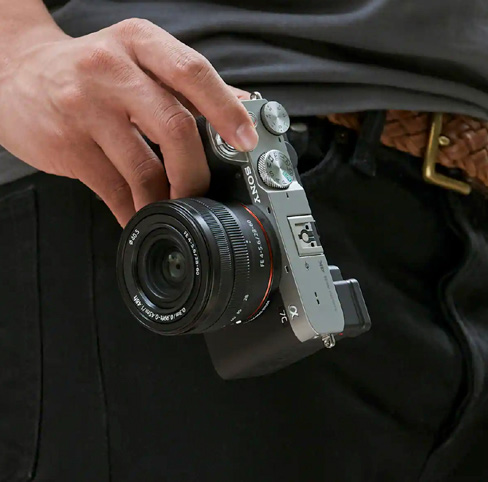
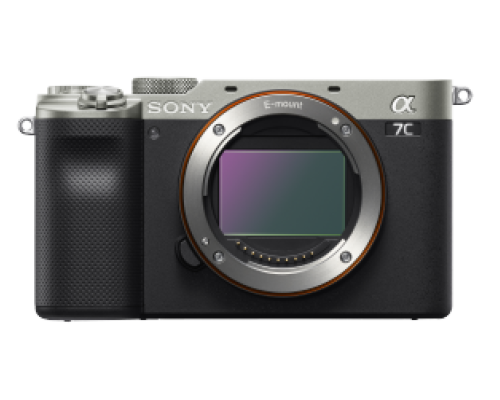
Sony Alpha camera supported by Sony SDK (Software Development Kit)

Sony Alpha camera supported by Sony SDK (Software Development Kit)
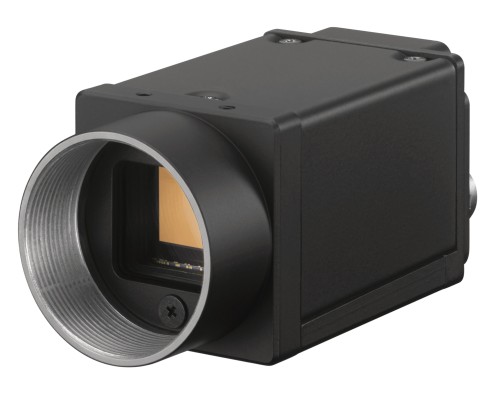
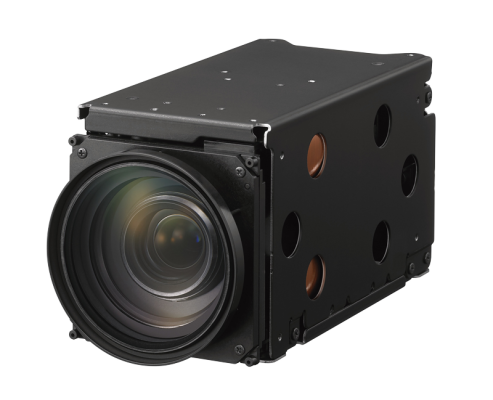
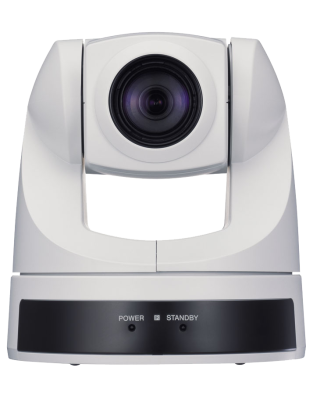
Digital Video Camera using various interfaces (USB, Gigabit Ethernet, Camera link)
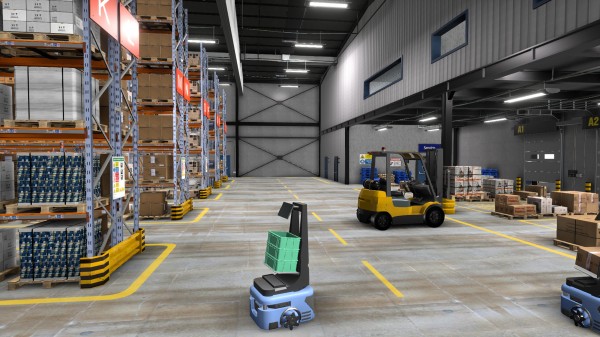
Automation depends on more intelligent machines that can perceive and understand the world around them. Advances in miniaturised LiDAR are delivering precise, real-time 3D vision across increasingly complex environments.
Autonomy is all around us. Key macrotrends such as labour shortages and ageing populations mean there is intense demand for machines that can operate without human oversight and make informed decisions in complex environments. But such capability means autonomous systems need reliable perception and understanding in real time, requiring exemplary sensing performance.
The challenge is that many traditional sensing technologies have significant limitations under certain conditions. Cameras struggle with lighting, depth ambiguity and privacy concerns, while radar lacks resolution for fine detail and close-range precision. These drawbacks can result in inconsistent perception in complex, real-world environments.
Consequently, other sensing technologies have come to the fore – both as standalone solutions and as part of sensor fusion approaches. Light Detection and Ranging (LiDAR), for example, has become a critical enabler for autonomous systems, providing an accurate, real-time 3D understanding of the surrounding environment. By measuring distances with laser pulses, LiDAR sensors can capture precise shapes, distances, and motion, while reliably detecting obstacles.
This capability enables autonomous systems to construct ultra-detailed maps of their surroundings in real time, even in challenging conditions such as poor lighting, bad weather and low reflectivity. It is this consistent, predictable spatial awareness that enables decision-making without a human in the loop (HITL) across a range of autonomous applications.
Where LiDAR is making a difference
Indeed, LiDAR is already the foundational technology for many of the autonomous systems that are woven into the fabric of our daily lives. In industrial settings, for example, ground-based robots are increasingly used in factories to perform tasks such as automated material transport and to collect spare parts across distributed warehouses. In these instances, LiDAR sensors can underpin mission-critical capabilities, including collision avoidance, navigation, object identification, and terrain mapping, ensuring the safe and efficient deployment of robots in industrial settings.
Robot Simultaneous Localisation and Mapping (SLAM) is another particular area of innovation. Here, LiDAR sensors can accurately detect the environment in 3D, allowing them to localise the robots position in relation to its surroundings. As a result, autonomous robots can safely navigate even the most complex industrial environments, such as factory floors, which often contain objects with various material finishes, including metals and shiny paint. Overall, the technical attributes of LiDAR sensors, including long-distance detection, durability, high frame rates, and the ability to manage multi-sensor interferences, make them ideal for such robotic applications.
Agriculture is another example of exciting innovation. LiDAR is already being used for autonomous crop harvesting systems and post-harvest quality evaluation, as well as for other preventive measures such as disease detection and prevention, weed control, and plant health evaluation. In terms of livestock management, it has also been deployed to improve the performance of autonomous feeding machines for cattle and other animals. By integrating LiDAR into such systems, the feed can be distributed more evenly along the troughs. This type of functionality could help farmers provide better care for their livestock, enhance productivity, and reduce labour costs.
Even in healthcare, LiDAR is making a difference. It could be used for continuously monitoring a patient's movements on hospital wards to detect sudden changes in posture and gait that may indicate individuals at risk of falling, allowing medical professionals to intervene before an incident occurs. LiDAR could also be used for the contactless monitoring of breathing patterns, providing medical teams with timely alerts for patients with respiratory conditions or those under sedation.
Next-generation depth sensors
Key to this type of performance are next-generation LiDAR depth sensors, which in recent years have benefited from critical advances in size, precision, and integration. The latest Direct Time-of-Flight (dTOF) ranging modules equipped with a Single-Photon Avalanche Diode (SPAD) sensor enable extremely precise measurements over long distances and high accuracy even when the incident light is weak. This development is seen as a critical advance in autonomous systems, which are increasingly expected to operate in a broad range of light conditions – both indoors and outdoors.
Solid-state depth sensors, in particular, offer significant size advantages by eliminating the need for many moving parts. The latest designs offer ~30mm form factors – roughly the size of a human thumb – while weighing as little as 50g. When housed in a robust exterior casing made from materials such as shockproof aluminium alloy, these sensors can provide rugged performance even in the harshest environmental conditions while facilitating thermal cooling. The size, weight, and robustness of the latest depth sensors make them suitable for applications such as autonomous mobile robots, where limited space is available.
Excellent range and ease of integration
High precision and accuracy are also critical to performance. The latest dToF ranging modules, equipped with a SPAD sensor, can measure distances over various ranges, for example, up to 10 meters with a ±5 cm margin, both indoors and outdoors, with a distance resolution of 0.25mm. Additionally, such modules can accurately measure distances to objects that are difficult to detect with other ranging methods. This includes low-contrast subjects, low-reflectivity objects, and floating objects, making it suitable for integration into robots used in environments such as stores and warehouses, where objects are often mixed and closely spaced.
Highly accurate long measurement range, even at long distances of 40 meters indoors and 20 meters outdoors, can be achieved under bright summer conditions, which can be challenging when used in applications such as inspecting infrastructure, including bridges, highways, and dams. The horizontal field of view is often 30° or more.
Finally, there are integration considerations. Housings of the latest compact modules make them easy to integrate into various devices, with features such as pre-drilled screw holes for a lockable USB connector. The latest depth-sensing solutions offer internal processing and output point cloud, histogram, and intensity data, along with features such as USB-C IN/OUT with Power over USB functionality and support for daisy-chaining multiple modules to expand the field of view.
Continued development of more efficient and resilient systems
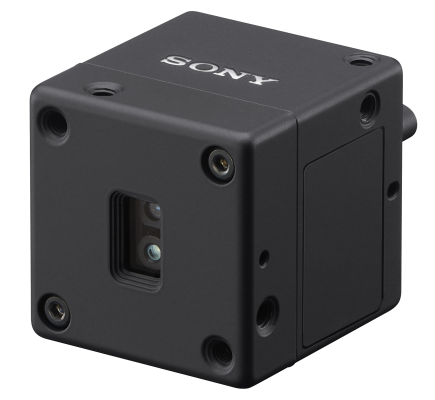
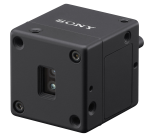
In conclusion, advances in LiDAR mean that it can act as the foundational infrastructure for our increasingly automated world. Modules such as Sony’s AS-DT1 LiDAR Depth Sensor have become smaller, lighter, and more precise, opening up new fields of application such as autonomous robots, agriculture and healthcare.
Looking further into the future, LiDAR is expected to play an increasingly important role in sensor fusion for autonomous systems. For instance, 3D data can be combined with high-quality video to provide even more granular detail about a specific environment. Further advances are also likely to yield improved resolution, an increased field of view, and the ability to record data over greater distances - enabling ever more efficient and resilient systems.
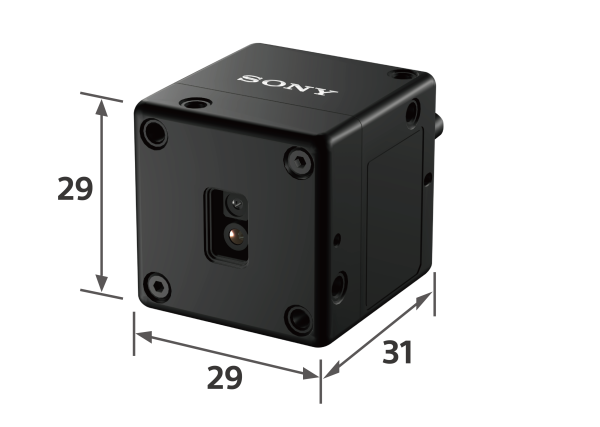
AS-DT1 ‘Direct Time of Flight’ LiDAR Depth Sensor Provides Precision Measurement Accuracy, Distance Resolution and Measuring Range