Digital Imaging Camera/SDK
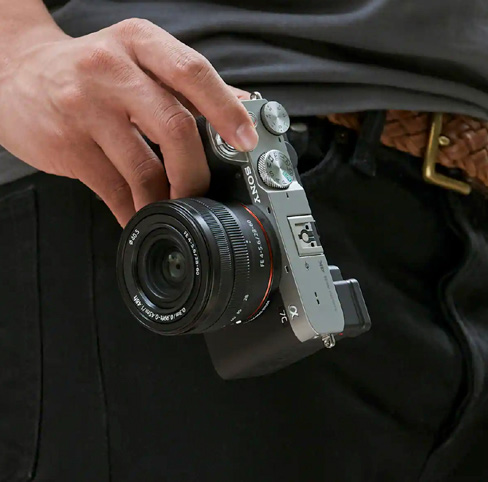
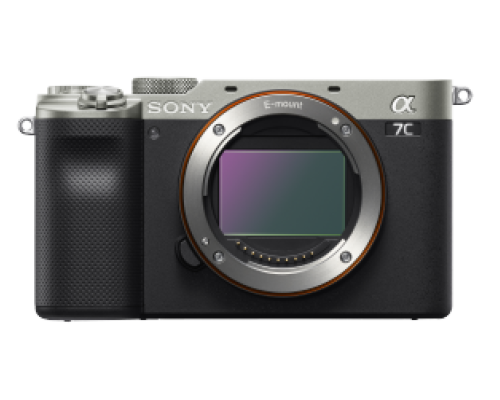
Sony Alpha camera supported by Sony SDK (Software Development Kit)

Sony Alpha camera supported by Sony SDK (Software Development Kit)
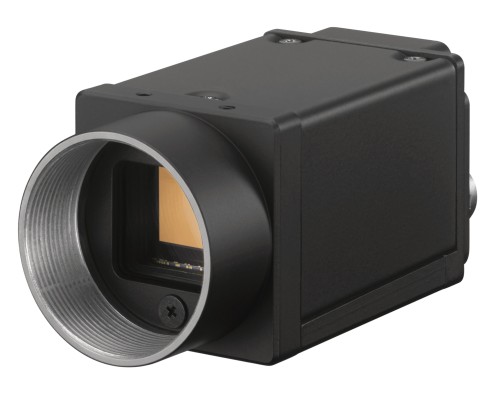
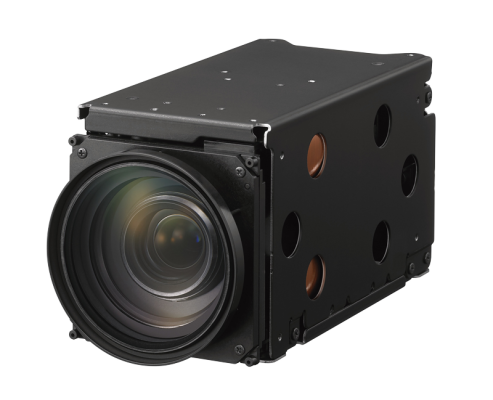
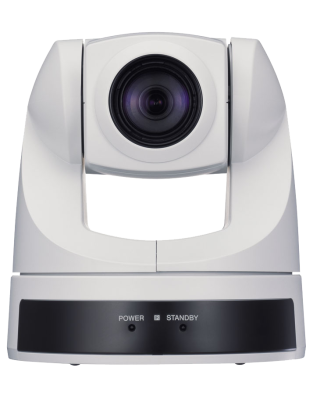
Digital Video Camera using various interfaces (USB, Gigabit Ethernet, Camera link)
More automated systems are all around us. From ground-based robots to driverless vehicles and drones, we see the increasing application of machines that operate with an accurate, real-time understanding of their surroundings.
Light Detection and Ranging (LiDAR) has become a foundational technology for such capability. By measuring distances with laser pulses, LiDAR sensors can be used to capture precise shapes, distances, and motion, reliably detecting obstacles, no matter whether it is day or night. This capability enables autonomous systems to construct ultra-detailed maps of their surroundings in an instant. It is this consistent, predictable spatial awareness that underpins safe decision-making without a human in the loop.
For autonomous systems, accurate perception is not a nice-to-have feature; it is a critical performance enabler. Take ground-based robots moving around a factory floor, for example. Their systems must continuously interpret surroundings with certainty, often in unpredictable environments where there are obstacles of many types. Depth errors of just a few centimetres can significantly invalidate navigation paths and collision avoidance decisions. Equally, performance must remain consistent across bright sunlight, low light, reflective surfaces, and low-contrast objects – all common in modern industrial settings.
Therefore, sensing technology must offer high accuracy, low latency, environmental robustness, and the ability to operate reliably without human involvement. And it needs to be compact and lightweight for easy integration within embedded environments. It is within this highly demanding context that advances in LiDAR architecture have become critical to the next generation of autonomous capability.
Understanding iTOF and dTOF techniques
With autonomous systems increasingly shaping the world around us, it is worth taking a deeper dive into next-generation LiDAR sensors and their capabilities. Typically, both mechanical and solid-state LiDAR rely on Time-of-Flight (ToF) sensing, which measures distance by determining the time it takes for emitted laser pulses to reflect off objects and return to the sensor, enabling the creation of a depth map of the scene.
Within ToF, two core timing techniques are used: Indirect Time-of-Flight (iTOF) and Direct Time-of-Flight (dTOF) – and each approach brings significant performance advantages. iTOF estimates distance by analyzing phase shifts in modulated light, representing a particularly well-proven and cost-effective approach for shorter ranges. dTOF, on the other hand, precisely establishes the time it takes for a pulse to travel to an object and back. This approach delivers higher accuracy and long-range performance, but it requires sophisticated electronics to perform its task.
The benefits of single-photon avalanche diode modules
As a global leader in sensing technology, Sony ISS produces both iTOF and dTOF sensors, recognizing that each technology has its place in different autonomous applications. However, for the evolution of LiDAR, particularly in relation to miniaturization and precision for next-generation applications, intense research and development efforts have been focusing on dToF, which delivers extremely fast and accurate measurements, distance resolution, and a wide measuring range. This has led to the development of a proprietary dToF ranging module equipped with a Single-Photon Avalanche Diode (SPAD) sensor, enabling extremely precise measurements over long distances and high accuracy even when the incident light is weak. This development is seen as a critical advance in autonomous systems, which are often expected to operate in a broad range of light conditions – both indoors and outdoors.
Introducing the AS-DT1 LiDAR Depth Sensor
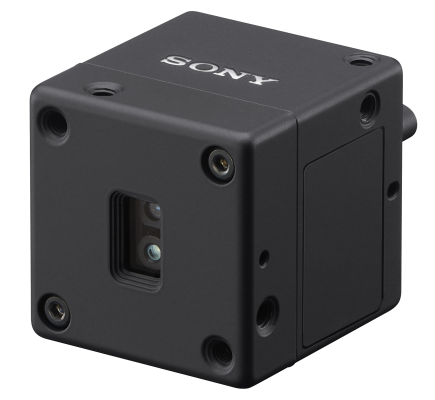
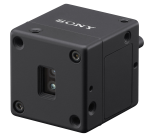
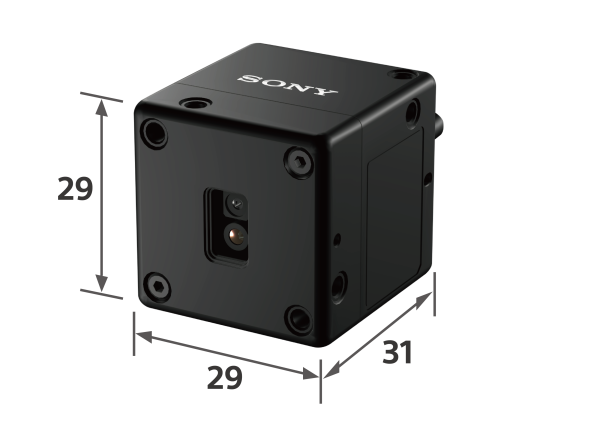
This SPAD-based module is a critical component in Sony’s AS-DT1 LiDAR Depth Sensor, the world’s smallest and lightest LiDAR depth sensor. Now commercially available, the AS-DT1 LiDAR can measure distances to low-contrast subjects and objects with low reflectivity. In addition to accurate measurement, the sensor is compact and lightweight, for quick and easy integration into a wide range of devices. Some of its critical performance characteristics include:
Extremely small and lightweight, yet robust
The AS-DT1 leverages miniaturization and optical lens technologies from Sony's machine vision industrial cameras, and the solid-state design eliminates the need for many moving parts. These factors mean the AS-DT1 measures just 29mm x 29mm x 31mm – making it roughly the size of a human thumb – while weighing only 50g. It is housed in a robust, shockproof aluminium alloy exterior casing that provides rugged performance even in the harshest environmental conditions while facilitating thermal cooling. The size, weight, and robustness characteristics make the AS-DT1 suitable for applications such as autonomous mobile robots, where limited space for depth sensors is available, and drones, where payload weight affects flight distance.
High precision and accuracy
Sony’s proprietary dToF ranging module, equipped with a SPAD sensor, can measure distances at various ranges, for example, up to 10 meters with a margin of ±5 cm, both indoors and outdoors. Distance resolution is 0.25mm. Additionally, it is capable of accurately measuring distances to various objects that are difficult to detect with other ranging methods. This includes low-contrast subjects, objects with low reflectivity, and floating objects, making it suitable for integration into robots used in environments such as stores and warehouses, where there are often mixed objects situated closely together.
Long measurement range
The AS-DT1 is highly accurate, even at long distances of 40 meters indoors and 20 meters outdoors, under bright summer conditions (assuming 100,000 lux), which can be challenging when used in applications such as inspecting infrastructure, including bridges, highways, and dams. The horizontal field of view is 30° or more, while the maximum measurement range @15 fps, 50% reflectivity, centre, is listed as indoor: 40 meters*4 and outdoor 20 meters*4.
Ease of integration
The compact housing makes it easy to integrate into various devices. At the rear of the AS-DT1 are pre-drilled screw holes for a lockable USB connector. The AS-DT1 depth-sensing solution offers internal processing and outputting point cloud, histogram, and intensity data. It features USB-C IN/OUT with Power over USB functionality and supports daisy-chain connections of up to four modules to expand the field of view. To streamline development, it includes an SDK and source code compatible with Linux® ARM32, Linux® ARM64, Linux® x64, Windows® 11, OpenCV®, and ROS2, making it adaptable to a wide range of platforms.
Welcome to the world of more autonomous systems
The launch of the AS-DT1 LiDAR Depth Sensor will help usher in a new era of autonomous capability across multiple applications. Drones, in particular, need small, light, high-performance sensing capability. The AS-DT1 can capture highly accurate aerial measurements, enabling the creation of 3D models with centimetre-level precision and the detection of features invisible to traditional imaging methods, for more detailed mapping.
Looking further into the future, LiDAR will play a role in increasingly sophisticated sensor fusion, combining 3D data with other sensor-based inputs, such as high-quality video, to provide even more granular detail about a specific environment. That will open LiDAR to an even broader range of autonomous applications, especially as further advances are likely to yield improved resolution, a wider field of view, and the ability to record data over greater distances.
In short, the future will be increasingly autonomous. And the launch of new technologies such as the AS-DT1 proves that Sony will be right at the heart of this exciting new tomorrow.
Click here to find out more about Sony’s AS-DT1 LiDAR Depth Sensor